 Skip to content




Propane is one of the most versatile fuels in the world. If you’ve ever fired up a propane grill, heated your home with a propane furnace, or seen a propane delivery truck in Worcester, you’ve experienced its wide range of uses.
What makes propane truly unique is its ability to exist in two different states: as a liquid or a gas. This dual nature allows propane to be stored safely, transported efficiently, and used effectively in heating, cooking, cleaning, and powering equipment.
What Makes Propane a Liquid and a Gas Explained
For homeowners in Massachusetts, understanding how propane behaves is practical knowledge. With cold winters and high demand for heating, propane is a reliable fuel source that connects directly to HVAC systems for both repair and installation needs.
Let’s take a closer look at why propane can act as both a liquid and a gas, and why that matters for daily life.
Propane Basics
Propane is a hydrocarbon gas, a byproduct of natural gas processing and crude oil refining. Chemically, it’s C₃H₈, meaning it contains three carbon atoms and eight hydrogen atoms. This simple structure makes propane a clean-burning alternative fuel widely used in homes, businesses, and agriculture.
At normal temperature and pressure, propane is an odorless gas. But when compressed or cooled, it condenses into a liquid. This property makes propane incredibly useful for safe storage and transport. Propane fuel in liquid form can be stored in tanks and later released as propane gas for everyday use.
Propane as a Gas
Under everyday conditions, propane is naturally a gas. It’s the form most often used in HVAC systems, kitchen appliances, and outdoor equipment.
Common propane gas applications include:
- Heating homes with furnaces and boilers.
- Providing energy for stoves, ovens, and water heaters.
- Powering gas grills, fire pits, and patio heaters.
Propane gas burns cleanly compared to coal or diesel fuel, making it a popular choice for homeowners who want reliable, efficient heating with fewer emissions.

Propane as a Liquid
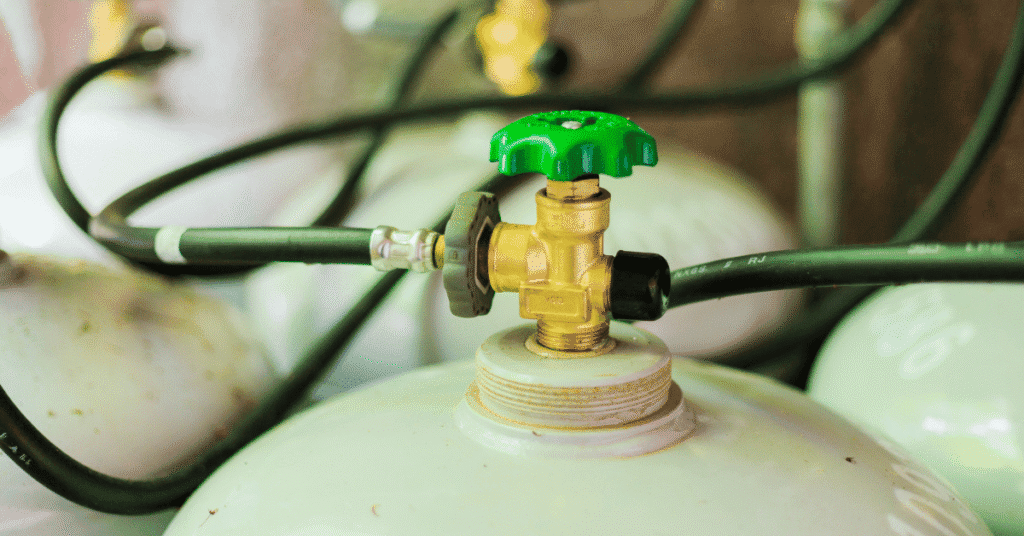
When stored under pressure inside a propane tank, propane transitions into a liquid state. This is how propane is stored and transported before use.
Why propane is stored as a liquid:
- Compact and energy-dense, storing more fuel in a smaller space.
- Easier and safer to transport for commercial propane delivery.
- Ready to expand into gas once released for immediate heating or cooking.
Liquid propane vaporizes as soon as it’s released from the storage tank, turning into gas for furnaces, boilers, and other appliances.
The Science Behind the Phase Change
The ability of propane to become liquid or a gas depends on pressure and temperature. At room temperature, propane becomes liquid when compressed into a liquid under about 100–200 psi of pressure.
Much like carbon dioxide in a soda can, propane stays in liquid form until the pressure is released. Once a valve opens, propane transitions into a gaseous state, ready for use. This property makes propane incredibly versatile and explains why propane is stored under pressure.
Everyday Uses of Propane in Both Forms
Propane’s dual nature provides flexibility in both residential and commercial use.
In gas form, propane is commonly used for:
- Furnaces and boilers during cold winters.
- Hot water heating for showers, dishwashing, and laundry.
- Gas ranges and ovens for cooking.
In liquid form, propane is commonly used for:
- Bulk storage and delivery in tanks and cylinders.
- Fueling vehicles, forklifts, and commercial equipment.
- Supporting HVAC contractors with installation, repair, and cleaning services.
This versatility makes propane a fuel source that adapts to multiple propane applications.
Benefits of Propane for Heating and Cooling
For residents of Worcester and beyond, propane offers several advantages:
- Efficiency: Propane furnaces heat homes quickly with steady warmth.
- Eco-Friendly: Produces fewer emissions than heating oil or coal.
- Reliable Supply: Propane stored in tanks keeps homes heated even during power outages.
- Versatile Fuel: Can be used for furnaces, boilers, water heaters, and whole-home generators.
The propane industry also highlights propane as a safe, energy-efficient, and versatile fuel source.
Safety Considerations for Propane Use
Propane is highly safe when handled properly, but both liquid propane and propane gas require proper care.
Key propane safety guidelines include:
- Always store propane tanks upright and in a safe location.
- Use propane services and rely on professional installation for HVAC systems.
- Install carbon monoxide detectors in homes with propane appliances.
- Schedule propane cleaning, repair, and maintenance with licensed contractors.
- If you smell propane (odorized with “rotten egg” scent), leave immediately and call for help.

Propane and Modern HVAC Systems
Propane is a popular choice in modern HVAC systems across Massachusetts. Propane furnaces, boilers, and hybrid systems offer reliable heating with less propane supply consumption.
- Furnaces: Deliver steady heating in cold climates.
- Boilers: Provide radiant floor heating and hot water.
- Hybrid Systems: Combine propane with heat pumps for efficiency.
Many propane systems qualify for Mass Save rebates, reducing costs for propane installation and upgrades.
Why Work with a Local HVAC Expert
While propane is naturally a gas and can be compressed into a liquid, safe handling requires expertise. Worcester-area homeowners should rely on propane services for propane tank installation, system repair, and cleaning.
Local contractors can assist with:
- Professional propane fuel system installation.
- HVAC repair and seasonal cleaning.
- Reliable propane delivery and storage tank maintenance.
- Expert propane education and safety checks.
Conclusion
Propane’s ability to exist as both a liquid and a gas makes it one of the most versatile fuels available. Stored under pressure in liquid form and released as a gas, propane is commonly used as a fuel for heating, cooking, and powering equipment.
Whether through propane production, propane supply, or propane applications in HVAC systems, propane is a popular choice in Massachusetts for homeowners who need a safe, efficient, and reliable energy source.
For expert propane services, including installation, repair, and cleaning, local contractors in Worcester ensure safe handling and dependable comfort.


