HVAC Services for Cambridge Homes
Cambridge, across the Charles River from Boston, is a dense, historic city with housing unlike the towns of Central Massachusetts. Here you find brick rowhouses, triple-deckers, converted Victorians, and condominiums carved out of older buildings, often on tight lots with shared walls. As an outer part of its service area, The Comfort Specialists brings the same careful approach to Cambridge homes that it brings to its Worcester County work, with attention to the particular demands of older, densely built housing.
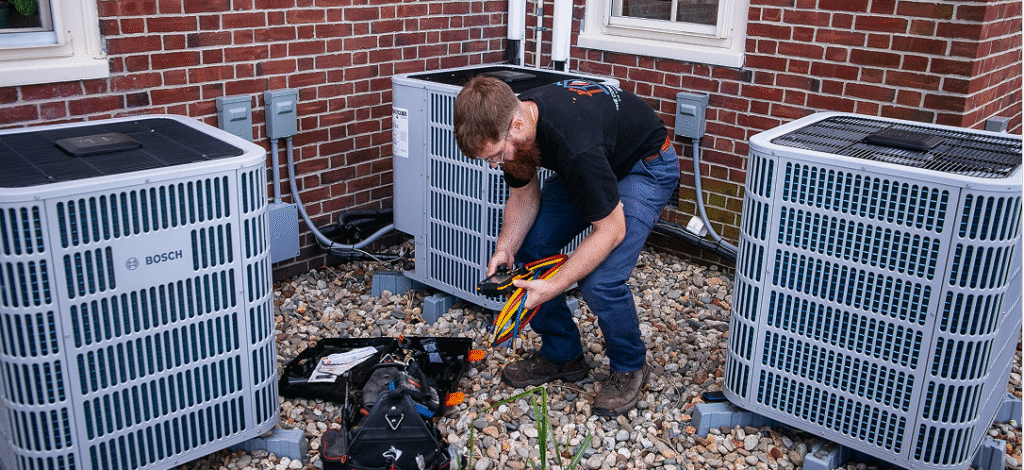
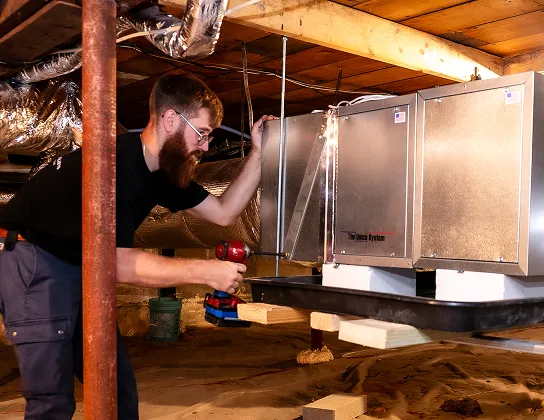
The challenges here are shaped by the age and density of the housing. Many buildings were put up long before central air or modern ductwork, and space for equipment, indoors and out, is often limited. That makes thoughtful system choices and steady routine maintenance especially important, because keeping a home comfortable without major construction depends on getting the most out of equipment that has to fit where there is room for it.
Dense, Historic Housing
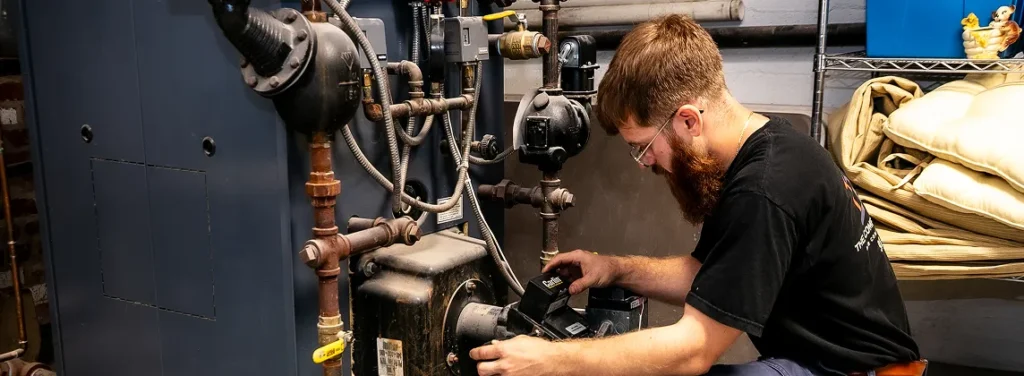
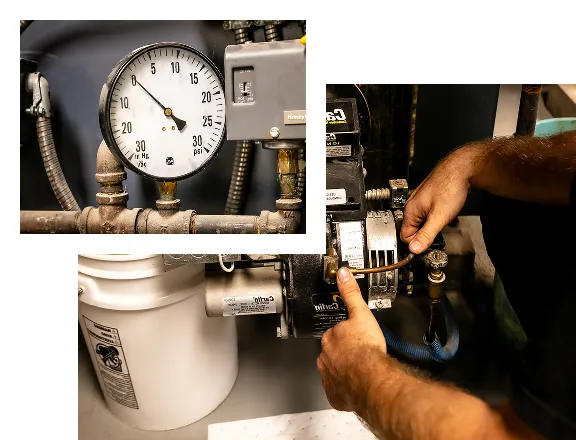
A great deal of Cambridge housing predates forced-air heating, relying instead on boilers, steam or hot-water radiators, and in some cases older oil systems. These setups can heat well, but adding cooling is where many homeowners run into trouble, because there is nowhere to route traditional ducts. In many homes here, ductless mini-splits solve that neatly, mounting on walls to cool individual rooms and floors without opening up historic plaster or giving up closet space to ductwork.
In multi-unit buildings and triple-deckers, zoning matters: different floors and units have different needs, and a system that lets each space be controlled on its own supports both comfort and energy efficiency. For condos and converted units, compact high-efficiency equipment often makes the most sense given how little room there is to spare, and it keeps monthly costs in check in a climate that runs both heat and cooling.
Common signs your system needs attention
You may notice uneven heat between floors of a triple-decker, radiators that knock or run cold, or window units that cannot keep up in summer. A boiler that short-cycles, rising bills, weak airflow, and humidity that lingers in close city rooms are all common signs worth attention. A professional inspection can sort out whether the issue is the equipment, the controls, or the way heat and cool air move through an older, tightly built structure.
Comfort in a City of Older Buildings
Keeping a Cambridge home comfortable is largely about matching the right equipment to a building that was never designed for it, then maintaining that equipment well. Because space is tight and many systems are shared or original to the building, regular care prevents small faults from spreading into bigger problems that are harder to reach and fix once they take hold in a dense setting. A quiet, well-tuned system also makes a real difference in close quarters, where noise and uneven temperatures are felt more keenly than in a detached home with room to spread out.
If your home relies on aging equipment, lacks cooling, or struggles with uneven comfort from floor to floor, a careful assessment is a good first step. A professional inspection can show which options fit your building’s age, layout, and available space, so you can plan improvements that respect the home’s character and work within its limits.
Cambridge HVAC Questions, Answered
How can I add air conditioning to an old building with no ducts?
Ductless mini-splits are the common solution for Cambridge’s older homes and triple-deckers. They cool room by room, need only a small opening for the line set, and avoid the heavy work of retrofitting ducts into a historic building. A professional inspection can plan the right placement for each unit.
Can each floor of a triple-decker be controlled separately?
Yes. Ductless and zoned systems let each floor or unit set its own temperature, which fits the way triple-deckers and multi-unit homes are used. This independent control also supports better energy efficiency, since you condition only the spaces in use.
Is my old Cambridge boiler worth keeping?
Older boilers can last a long time with routine maintenance, but efficiency drops over the years as parts age. Whether to keep, service, or replace one depends on its condition and running cost, which a professional inspection of your home can assess honestly.
 Skip to content